COMING SOON
Oil seals
Rotary shaft, V-ring and cassette seal information will be added in a future range update.

 Build your enquiry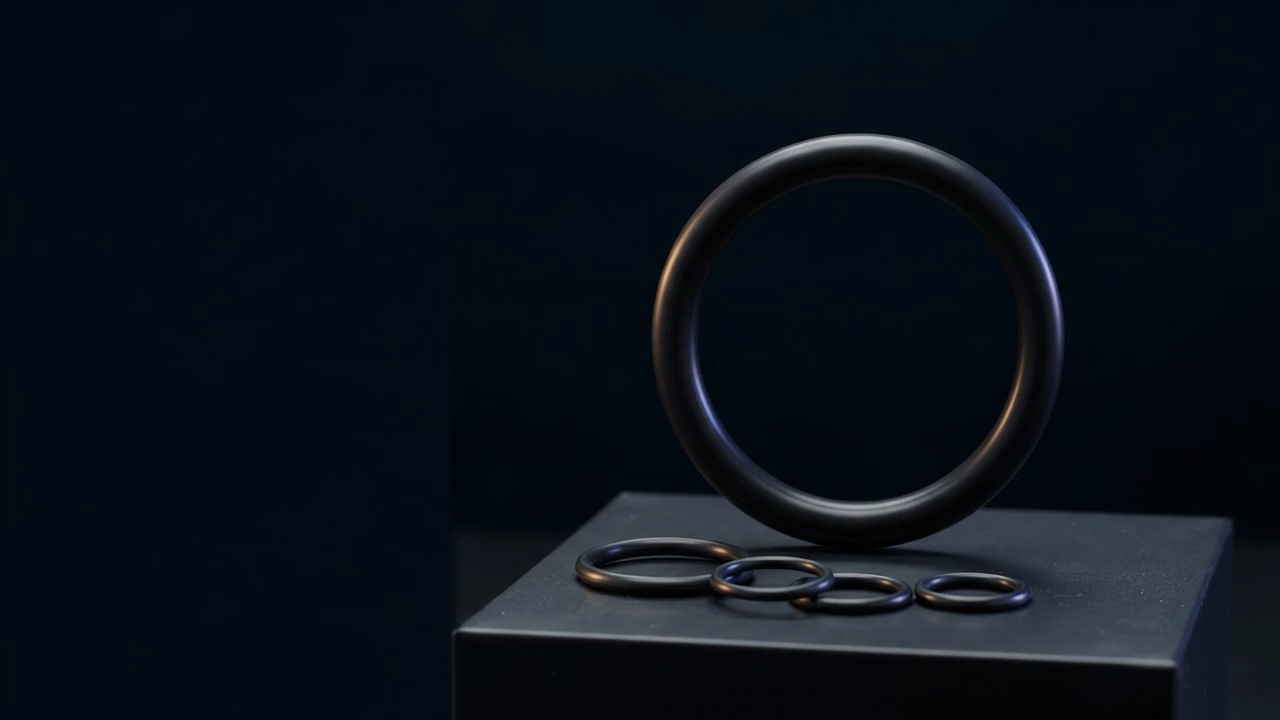
01 / PRODUCT FOCUS
Rubber O-rings for industrial applications in India. Explore the profile, then define the material and dimensions.
A circular cross-section for static and selected dynamic sealing. Specify the size, compound and operating conditions.
Explore profile ↗02 / CROSS-SECTIONFlat faces and a square or rectangular section. Match the profile to the drawing and the intended sealing arrangement.
Explore profile ↗03 / CROSS-SECTIONA four-lobed sealing profile. Check the gland, movement and compound when evaluating an alternative to an O-ring.
Explore profile ↗04 / CROSS-SECTIONA rounded sealing face with a flat side. A dedicated profile needs its own dimensions and gland assessment.
Explore profile ↗05 / CROSS-SECTIONRubber bushes, mounts and grommets developed around a drawing, sample or application requirement.
Explore profile ↗Rotary shaft, V-ring and cassette seal information will be added in a future range update.
Rod, piston, wiper and guide products are planned for a later release.
Profile diagrams show cross-section concepts, not finished-product drawings. Availability and final specifications are confirmed against the enquiry.
02 / MATERIAL INTELLIGENCE
Every environment asks something different of a seal. Start with the material, then specify the compound.
Nitrile
A practical starting point for mineral-oil sealing and general industrial applications.
Explore NBR O-rings +Hydrogenated nitrile
A nitrile-based family to consider when heat, ozone exposure and mechanical duty matter.
Explore HNBR O-rings +Fluorocarbon
A material family to consider for elevated temperatures and many oils and fuels.
Explore FKM O-rings +Ethylene propylene
Commonly considered for water systems and resistance to ozone and weathering.
Explore EPDM O-rings +Silicone
A flexible material family for selected static sealing and temperature-sensitive applications.
Explore VMQ O-rings +Neoprene
Chloroprene rubber for selected sealing duties involving weathering and moderate oil exposure.
Explore CR O-rings +General selection guidance, not a Rubrings product datasheet. Final performance depends on compound, fluid, temperature, pressure and gland design. Read the selection guide.
DIMENSIONS / PRECISION, DEFINED
A clear specification starts with two measurements. Add the operating conditions to make it an engineering brief.
Specify as ID × cross-section, followed by material and hardness.
03 / INDUSTRIES
Start with the application. Select the seal around the real operating conditions.
Fluid compatibility, pressure, clearances and movement.
Media exposure, temperature cycles and static or dynamic duty.
Operating fluids, vibration, heat and assembly requirements.
Water chemistry, cleaning cycles and contact approvals.
04 / RESOURCES & KNOWLEDGE
Useful answers for engineers, procurement teams and maintenance professionals.
Search nominal AS568 and JIS sizes, then add the selected dimensions to your enquiry.
Open size chart↗02 / MATERIAL LIBRARYExplore rubber families, common abbreviations and property-based selection groups.
Explore rubber types↗03 / PROPERTIESA visible reference table for density, glass transition and indicative service temperature.
View properties chart↗04 / SELECTIONUnderstand compound, hardness, pressure, movement and the details that determine fit.
Read selection guide↗An O-ring seals between mating surfaces. Its circular cross-section deforms inside a correctly designed groove.
NBR, HNBR, FKM, EPDM, silicone and neoprene serve different conditions. Colour alone cannot identify a compound.
Size is the starting point. Fluid, temperature, pressure and movement complete the specification.
Understand ID, cross-section and the information a drawing needs.
Read sizing guide +MATERIALS / 4 MIN READBuild a sensible material shortlist around your operating environment.
Read material guide +State inside diameter, cross-section, units, compound, hardness, fluid, temperature, pressure and quantity. Include a drawing or standard reference when available.
No. Colour is not a reliable material identifier. Confirm the compound code and supporting documentation.
No. Pressure capability depends on the compound, hardness, clearance, temperature and seal arrangement. Use an application-specific review.
No. Two identical sizes can behave differently because of their material, hardness and operating environment.
05 / YOUR NEXT SEAL STARTS HERE
Capture your O-ring requirements in one place. Download your brief for procurement or an engineering review.
Your information stays in this browser tab. This form downloads a brief; it does not send an enquiry.